The traditions of the Pathare Prabhu community offer interesting glimpses into its cultural heritage and historical connections with other communities.
Several customs observed by Pathare Prabhus bear similarities to traditions followed by Gujaratis and Rajputs. These similarities are reflected not only in ceremonial practices but also in traditional attire, ornaments and the words used to describe certain customs.
The following examples highlight these interesting parallels and provide a glimpse into the shared cultural heritage of our community.
Traditions with Gujarati Connections
A number of Pathare Prabhu customs have direct parallels with Gujarati practices. Some of the traditional expressions themselves are also similar to, or derived from, Gujarati words.
Kohale Rastaat
The Pathare Prabhu expression Kohale Rastaat is called Kohale Rahesavu in Gujarati.
Gujarati ParallelNavraanavris Poravtaat
The Pathare Prabhu expression Navraanavris poravtaat is called Puravatu in Gujarati.
Gujarati ParallelPaaypaakhni
On the day of the marriage, the bride’s father invites the groom for the marriage at the groom’s residence. Pathare Prabhus call this Paaypaakhni.
This tradition is said to have come from Gujarat.
Gujarati TraditionThe Groom’s Attire and Procession
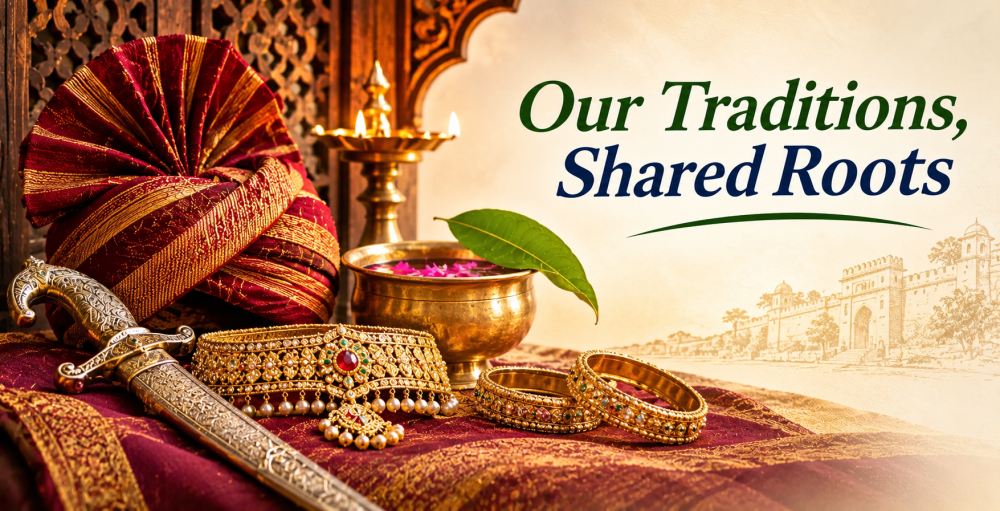
The groom wears a Paalnet, carries a knife and rides a horse to proceed to the bride’s residence.
Gujarati TraditionChaandlaa
After the marriage, Pathare Prabhus give Chaandlaa to the bride and groom. Chaandlaa is a Gujarati word.
Gujarati WordTraditions Shared with the Rajputs
Several Pathare Prabhu customs also find parallels in Rajput traditions. These include practices associated with ceremonial welcome, marriage rituals and the use of traditional objects.
Water and the Mango Leaf
Pathare Prabhus sprinkle water on the Gods using a mango leaf. This is identified as a Rajput tradition.
Rajput ParallelOvaarne
When the groom reaches the bride’s residence, the bride’s father circles the horse and waves a lamp in front of the groom’s head. This is called Ovaarne.
Rajput TraditionGift to the Groom’s Brother-in-law
Pathare Prabhus give a dress to the groom’s brother-in-law. Among the Rajputs, an Inaam is given instead.
Rajput ComparisonWashing of the Couple’s Feet
During the marriage ceremony, the legs of the bride and groom are washed. This tradition is also found among the Rajputs.
Rajput ParallelThe Antarpaat and the Sword
Along with the Antarpaat, Pathare Prabhus hold a sword during the marriage ceremony. Rajputs follow the same practice.
Rajput ParallelSimilarities in Traditional Attire and Ornaments
The cultural similarities extend beyond ceremonial practices to traditional clothing and jewellery.
Kamarpatta and Vela
Pathare Prabhu ladies wear ornaments known as Kamarpatta and Vela. These are identified as Rajput ornaments.
Rajput OrnamentsKathevaadi Paagote
Parbhi Paagotaas are found in Kathevaad and not in Maharashtra. Gujaratis call these Kathevaadi Paagote.
Kathevaad ConnectionA Glimpse of Shared Cultural Heritage
The examples presented above show how customs, traditional expressions, attire and ornaments of the Pathare Prabhu community have similarities with those of Gujarati and Rajput communities.
From the words used in everyday traditions to ceremonial practices and traditional ornaments, these parallels offer interesting avenues to explore the cultural connections reflected in our heritage.
Our Traditions, Shared Roots
Traditions are valuable links to the past. By understanding the similarities between our customs and those of other communities, we gain a deeper appreciation of the cultural influences that have shaped our identity.
helps us understand our heritage.