GIFTS GIVEN TO THE DAUGHTER-IN-LAW DURING FESTIVALS
In our Pathare Prabhu Dnyati, one of Mumbai’s oldest and culturally refined communities, the relationship between the daughter-in-law (“सुनबाई”) and her marital family has traditionally been nurtured through an elaborate system of festive gifting, jewellery presentation, seasonal exchanges and ceremonial honouring.
These customs are not merely material exchanges. They symbolize:
• Acceptance into the family
• Affection and prestige
• Continuity of lineage
• Prosperity
• Preservation of community identity
The Pathare Prabhus historically belonged to an educated, affluent urban community of Bombay. Therefore, their festival traditions evolved with a strong aesthetic sense involving gold ornaments, heirloom textiles, silverware, flowers, sweets and ritual foods.
1. THE CULTURAL IMPORTANCE OF GIFTS TO THE DAUGHTER-IN-LAW
After marriage, the daughter-in-law becomes the central female figure in many family rituals. During important festivals, she is ceremonially invited, adorned, offered special delicacies and gifted clothes or ornaments.
These exchanges are called:
“Bheti–Paratbheti” (भेटी – परतभेटी)
meaning “Gift and reciprocal gift”.
It represents a continuous exchange between the bride’s parental home and her in-laws.
These exchanges traditionally continue:
• During the first year after marriage
• On major Hindu festivals
• During pregnancy
• And sometimes throughout married life
2. TYPES OF ORNAMENTS TRADITIONALLY GIVEN
Pathare Prabhu jewellery is distinctive and highly artistic, combining Maharashtrian, Gujarati, Konkani and even Parsi influences.
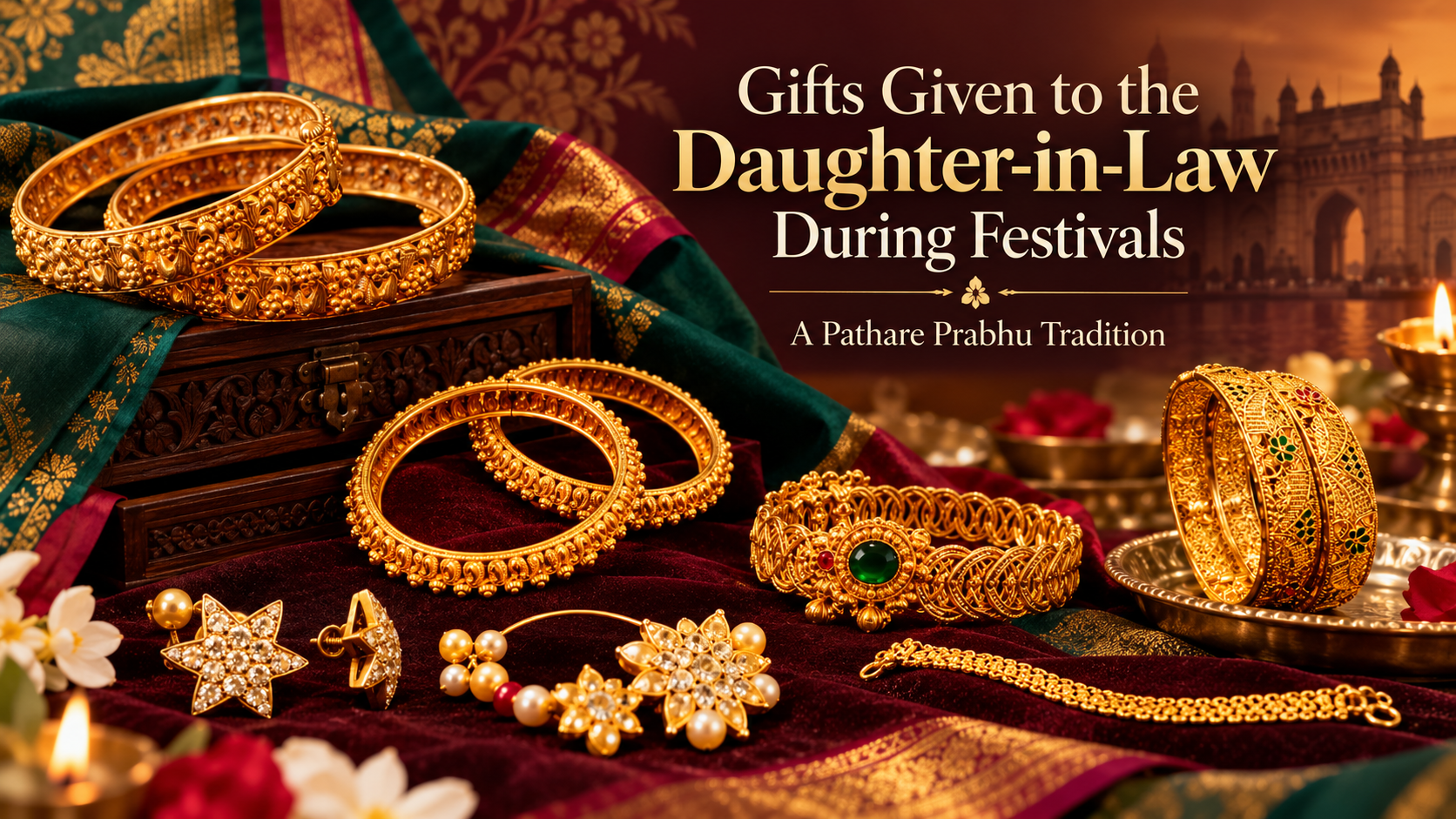
A. GOLD BANGLES
Gold bangles are among the most important ornaments given to the new bride or daughter-in-law.
Traditional varieties include:
• Patlya (पाटल्या) – bangles with self-design
• Bangdya (बांगड्या) – thinner bangles with different designs
• Tode (तोडे) – thick bangles with traditional designs
• Pichodya (पिछोड्या) – bangles with triangular decoration on one side
• Ruifhule (रुईफुले) – bangles with a kuda, traditionally featuring manik/ruby
• Jalichya Bangdya (जाळीच्या बांगड्या) – bangles with lattice or “jali” workmanship
• Jodd (जोड) – two thick bangles joined together without additional design
• Belt Bangles / पट्टा बांगड्या – bangles with a buckle, often featuring a ruby
In jewellery shops across Maharashtra, “belt bangles” may also be referred to as:
• बेल्ट डिझाइन बांगड्या
• पट्टा डिझाइनच्या बांगड्या
There is no single universally accepted traditional Marathi term for the modern “belt bangles” style.
SYMBOLISM OF GOLD BANGLES
Gold bangles traditionally represented:
• Marital prosperity
• Continuity of the family
• Auspiciousness
• Fertility
FEATURES
• Intricate lattice (“जाळी”) workmanship
• Thick traditional gold craftsmanship
• Often heirloom pieces passed down through generations
B. NECKLACE – “SARI” (सरी)
“Sari” is a traditional Pathare Prabhu necklace known within the community.
Characteristics:
• Close-set gold design
• Elegant yet aristocratic appearance
• Worn during festivals and family ceremonies
The necklace symbolized the daughter-in-law’s formal acceptance into the household.
C. KAAP / MOR KAAP (काप / मोर-काप)
Kaap or Mor Kaap is a very iconic ornament within the community.
Design features include:
• Broad ear ornaments
• Peacock (“Mor”) motifs
• Kundan or gold work
• Crescent and bird patterns
These earrings were considered markers of Pathare Prabhu feminine identity and were proudly worn during festive gatherings.
D. NATH (नथ)
The Nath, or traditional Maharashtrian nose ring, often decorated with pearls, is an important symbol of married status.
It is traditionally worn during:
• Diwali
• Weddings
• Haldi-Kunku
• Mangalagaur
• Major pujas
E. HAIR ORNAMENTS AND BROOCHES
Community wedding customs also mention gifts such as:
• Flower-shaped hair clips
• Brooches
• Decorative gold accessories
• “Khelna”, “Bar” or “Toode” (खेळणे, बार, तोडे) ornaments
The choice of ornaments depended on the family’s wealth and individual family traditions.
3. FESTIVAL-WISE GIFTS TO THE DAUGHTER-IN-LAW
A. MAKAR SANKRANTI
Makar Sankranti was one of the most elaborate gifting festivals.
Traditional gifts included:
• Black saree
• Silver cup or glass
• Tilgul laddoos
• Decorative chikkis
• Sweets made from sesame and jaggery
• Silver vessels
• Festive food hampers
• Articles made from edible products such as peppermint
The newly married daughter-in-law was especially honoured during her first Sankranti after marriage.
Black sarees were considered elegant and seasonally appropriate for Sankranti.
Silver utensils represented purity, prosperity and household status.
B. HOLI
During Holi:
• Pink sarees were gifted to daughters-in-law
• Puran Poli and festive meals were prepared
Pink traditionally symbolized:
• Spring
• Joy
• Youthfulness
• Fertility
• Affection
C. GUDHI PADWA
On the Marathi/Maharashtrian New Year, the daughter-in-law was ceremonially invited and offered a festive lunch.
She was traditionally gifted:
• Clothes
• Ornaments
Special dishes included:
• Sakhar Bhaat (साखर भात)
• Keshari Bhaat (केशरी भात)
• Festive sweets
The first Gudhi Padwa of a new bride carried enormous emotional importance.
D. MANGO SEASON – “आंबेसडे”
A uniquely Bombay-Konkan custom involved sending:
• Alphonso mangoes
• Flower garlands
• Sarees
• Blouse pieces
• Shirts
• Fabrics
Women also received:
• Floral gajras
• Perfumes
• Flowers
• Festive attire
E. DIWALI
Diwali gifts traditionally included:
• Sarees
• Jewellery
• Sweets
• Silver articles
• Decorative household items
A married daughter-in-law was expected to dress in full traditional jewellery during:
• Lakshmi Pujan
• Bhaubeej
• Padwa celebrations
4. HALDI-KUNKU AND THE HONOUR OF MARRIED WOMEN
Among Pathare Prabhus, married women (“सुवासिनी” or “सवाष्णी”) were deeply respected in ritual culture.
During Haldi-Kunku gatherings:
• Married women were invited home
• Turmeric and vermillion were applied
• Flowers and sweets were distributed
• Small gifts were presented
These gifts often included:
• Combs
• Mirrors
• Bangles
• Silver containers
• Perfumes
• Coconut
• Blouse pieces
• Jewellery items
The daughter-in-law played an important ceremonial role in both hosting and participating in these traditions.
5. HEIRLOOM JEWELLERY AND GENERATIONAL TRANSFER
One remarkable feature of the Pathare Prabhu community is the preservation of heirloom ornaments.
Many ornaments were:
• Passed from grandmother to daughter-in-law
• Designed with ancestral motifs
• Handcrafted generations earlier
• Treasured as symbols of family prestige
Traditional sarees with gold and silver borders (“कझबी”) and jewellery sets were also treasured inheritance objects.
6. THE SOCIAL MEANING OF THESE GIFTS
The gifting system had several deeper social purposes:
Acceptance – Welcoming the bride into the lineage
Prestige – Displaying family refinement
Security – Gold serving as financial protection for women
Continuity – Preserving family customs
Affection – Strengthening emotional bonds between families
Ritual Status – Recognizing married womanhood
7. MODERN CHANGES
Today, many of these traditions continue in modified forms.
Some changes include:
• Lighter jewellery
• Designer sarees instead of heirloom drapes
• Branded gifts
• Gold coins instead of elaborate ornaments
However, among traditional Pathare Prabhu families, several practices continue as cherished cultural traditions:
• Sankranti exchanges
• Diwali gifting
• Silver utensils
• Saree presentations
• Heirloom jewellery customs
CONCLUSION
In our Pathare Prabhu community, ornaments and festival gifts to the daughter-in-law were never merely decorative.
They represented:
• Dignity
• Family honour
• Prosperity
• Affection
• Continuity of tradition
• The cultural sophistication of old Bombay society
Gold jewellery, sarees, silverware, flowers, sweets and seasonal gifts together formed a beautiful ceremonial language through which families expressed love and social belonging across generations.
These traditions provide a fascinating glimpse into the cultural life of the Pathare Prabhu community and the importance given to family relationships, women, ritual and heritage.
Author – Sanjay Dalvi